
The Impact of Interactive Learning Tools in Aviation
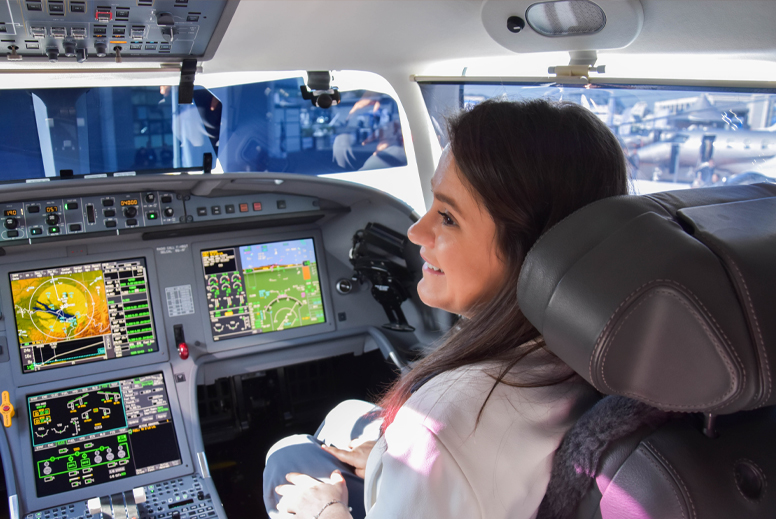
The Evolution of Aviation and Aircraft Maintenance Training
Aviation and maintenance training are essential for ensuring the safety and efficiency of air transport. Traditionally, aviation and maintenance education has relied on structured classroom instruction, combined with on-the-job training. While this method has proven effective over time, it often compartmentalizes knowledge and limits opportunities for integrated learning experiences.
In recent years, however, there has been increasing emphasis on interactive and multimedia learning tools and the role they play in shaping the learning experience. This study investigates how interactive learning technologies can assess individual skills and provide training experiences tailored to each learner.
Designing a personalized training program is not straightforward. Individuals differ in cognitive and affective capabilities, learning styles, experiences, motivations, and attitudes (Mauro & Barshi, 2003). Through immersive simulations, interactive platforms, and virtual environments, computer-based technologies have significantly transformed aviation and maintenance training. These tools allow students to engage with complex aircraft systems and maintenance procedures in a risk-free environment while personalizing their learning journey.
The primary aim of this project is to define the current state of the art regarding the effectiveness of interactive learning tools in aviation and maintenance training, and to explore how these tools enhance individual learning experiences.
To approach this investigation, a mixed methodological framework was adopted, incorporating both qualitative and quantitative data. Structured survey questions evaluated the efficiency of practical and theoretical teaching components, while open-ended responses allowed students to share their experiences and reflections. This combination provided both statistical validation and deeper insight into the factors influencing student satisfaction.
Ultimately, the study seeks to determine whether it is beneficial for aircraft training and maintenance organizations to transition toward more modern and interactive learning methodologies.
Literature Review: Interactive Learning, VR, and AR in Aviation Education
Recent literature highlights the growing importance of digital interactive technologies in education.
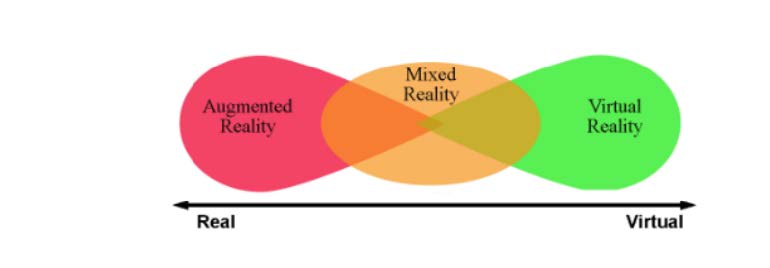
Liu and Zheng (2021) emphasize the role of digital interactive technology in enhancing meta-cognitive experiences in smart education. Their work focuses on learner-centered strategies and the development of cognitive attributes, exploring how VR, MR, and AI reshape educational frameworks.
Similarly, Ardiny and Khanmirza (2018) argue that augmented reality (AR) and virtual reality (VR) hold significant potential for improving students’ abilities and knowledge acquisition. Integrating AR/VR into teaching can create engaging and effective learning environments.
Rupasinghe et al. (2011) investigated the integration of VR training within Aircraft Maintenance Technology (AMT) programs. By aligning learning objectives with Bloom’s Taxonomy, they ensured that outcomes corresponded to students’ cognitive development levels. Their findings demonstrated a significant positive impact on student performance, particularly in oral examinations.
Sadasivan et al. (2006) proposed the use of virtual reality models for aircraft maintenance inspection procedures. Traditional maintenance training often struggles to replicate complex real-world environments. VR offers a realistic alternative, particularly where conventional multimedia methods fall short.
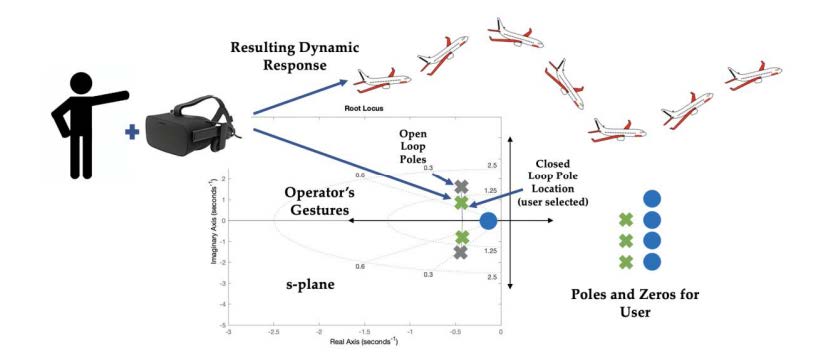
Davies, Calnoor Rajashekar, and Gururajan (2020) further explored the use of VR in aerospace engineering education, developing tools that allow students to manipulate flight controls and visualize system responses in real time.
Hubing et al. (2002) highlight the value of computer-based modules in engineering education. While such tools simplify complex topics and enhance problem-solving skills, they also require continuous evaluation and adaptation to meet evolving student needs.
Across the literature, a consistent conclusion emerges: interactive learning technologies can enhance understanding, retention, engagement, and performance—particularly in technically demanding fields such as aviation.
Research Methodology: Evaluating Interactive Learning Tools in Aviation Trainin
The increasing use of interactive learning tools in aviation and maintenance training provided the foundation for this research. To evaluate their impact, a mixed-method approach was adopted, integrating quantitative and qualitative data collection.
The first component of the research collected quantitative data through structured surveys. The second gathered qualitative insights through open-ended responses and visual observation.
The strength of this approach lies in its comprehensiveness. While quantitative data provide measurable results, qualitative responses reveal underlying perceptions and experiences. As Creswell (2013) notes, mixing methods can occur during data collection, analysis, or interpretation. Although combining numerical and textual data can present challenges, it significantly enhances the depth and reliability of findings.
In the aviation organization where the study was conducted, interactive learning tools were already integrated into training programs. Tablets were used during instruction, and much of the learning material had been converted into animated schematics accessible through digital platforms. Instead of static text-heavy manuals, students could observe dynamic system movements and interactions at the click of a button.
The research aimed to assess whether these tools genuinely enhanced learning, particularly in both theoretical and practical components of the course.
Methodological Analysis
The survey was conducted within an aviation and maintenance service provider in Malta, involving 30 students. The questionnaire was divided into two parts: one focusing on theoretical elements and the other on practical training.
Students evaluated course material, instructors, tasks, facilities, and tools using a rating scale ranging from excellent to poor. A general comment box allowed students to express additional thoughts, suggestions, or concerns.
Interestingly, approximately 50% of students rated the course material as excellent—even though the program was approved by the European Union Aviation Safety Agency (EASA). This suggests that regulatory approval alone does not guarantee engagement or perceived quality.
In practical training, some dissatisfaction emerged regarding facilities and available tools. Notably, 6% of students described the facilities and environment as inadequate.
Regarding duration, 40% of students felt that practical training time was insufficient, while most students considered the duration of theoretical instruction to be “just right.”
These findings highlight a recurring theme: while theoretical frameworks may be well structured, practical exposure remains limited—often due to restricted aircraft availability and resource constraints.
Qualitative Data and Visual Research
The qualitative responses revealed further insights. Many students commented directly on their instructors, suggesting that perceptions may be influenced by personal interaction.
However, several recurring concerns were evident:
- A noticeable gap between theoretical instruction and practical application
- Insufficient hands-on training
- Limited aircraft availability
- The need for stronger integration between learning components
Visual observations during the research indicated a positive classroom atmosphere during theoretical presentations, particularly when animated schematics and visual aids were used.
Illustrations and cockpit schematics appeared to support memorization and understanding, particularly for complex systems requiring precise recall.
Conclusion: The Future of Interactive Learning in Aviation and Maintenance Education
Addressing the topic of this project required integrating knowledge from aviation, engineering, instructional design, and cognitive learning theory. The scientific literature provided a strong foundation for analyzing how interactive tools influence aviation training.
Although the sample size was limited to a single provider, a clear trend emerged. Aviation and maintenance organizations must adapt to evolving educational standards and learner expectations.
The use of animated visuals, interactive schematics, and multimedia content has already improved engagement and replaced static, text-heavy materials. Students appear generally satisfied with these developments.
However, the findings also indicate that more interactive methods should be implemented—particularly in practical training components. The limited availability of aircraft and constrained field time reduce hands-on exposure, which is critical in this domain.
The literature strongly supports the integration of AR, VR, and advanced simulation technologies. These tools not only enhance competitiveness in the aviation education market but also provide meaningful learning experiences that contribute to professional development and improved decision-making.
Ultimately, interactive learning tools are not merely supplementary—they are increasingly essential. While multiple factors influence their effectiveness, their contribution to student learning in aviation and maintenance training is both valuable and, in many cases, indispensable.
Bibliography
1. Ardiny, H., Khanmirza, E.: The role of ar and vr technologies in education developments: opportunities and challenges. In: 2018 6th RSI International Conference on Robotics and Mechatronics (IcRoM). pp. 482–487. IEEE (2018)
2. A. Brown and J. Campione, “Psychological theory and the design of innovative learning environments,” in Innovaton in Learning: New environments for education, Hillsdae, NJ, USA, Lawrence Erlbaum Associates, 1996, pp. 289-325.
3. Barker, P.: Designing interactive learning. In: de Jong, T., Sarti, L. (eds.) Design and Production of Multimedia and Simulation-based Learning Material, Kluwer Academic, Dordrecht (1994)
4. Creswell, J. W. (2013). Research design: Qualitative, quantitative, and mixed methods approaches. Sage publications.
5. Davies, E., Calnoor Rajashekar, S., & Gururajan, S. (2020). Design and Development of a Virtual Environment to Enable Interactive Teaching of Aircraft Flight Dynamics and Control Concepts (Work in Progress). American Society for Engineering Education. https://doi.org/10.18260/1-2--34390
6. Di Serio, Ángela, María Blanca Ibánez, and Carlos Delgado Kloos (2013). “Impact of an augmented reality system on students’ motivation for a visual art course”. In: Computers & Education 68, pp. 586–596. ISSN: 03601315
7. Hubing, N., Oglesby, D. B., Philpot, T. A., Yellamraju, V., Hall, R. H., & Flori, R. E. (2002). Interactive learning tools: Animating statics. In ASEE Annual Conference Proceedings (pp. 8857–8866). https://doi.org/10.18260/1-2--10367
8. Mauro, R., & Barshi, I. (2003). Cognitive science and aviation training: Foundations for effective learning and operational application. In SAE Technical Papers. SAE International. https://doi.org/10.4271/2003-01-3061
9. Mohd Abdul AhadGautami TripathiParul Agarwal. Learning analytics for IoE based educational model using deep learning techniques: architecture, challenges and applications. Smart Learning Environments (2018)
10. Nik Muhammad Amirul Fawwaz Nik Abdullah, Ahmad Huzaifah Ahmad Sharipuddin, Safinaz Mustapha, M. N. Mohammed, "The Development of Driving Simulator Game-BasedLearning in Virtual Reality", 2022 IEEE 18th International Colloquium on Signal Processing & Applications (CSPA), pp.325-328, 2022.
11. Richard E. Mayer, Julie Heiser and Steve Lonn, "Cognitive constraints on multimedia learning: When presenting more material results in less understanding", Journal of educational psychology, vol. 93, no. 1, pp. 187, 2001.
12. Richard E. Mayer and Roxana Moreno, "Animation as an aid to multimedia learning", Educational psychology review, vol. 14, no. 1, pp. 87-99, 2002.
13. Richard E. Mayer and Richard B. Anderson, "The instructive animation: Helping students build connections between words and pictures in multimedia learning", Journal of educational Psychology, vol. 84, no. 4, pp. 444, 1992.
14. Rupasinghe, T., Kurz, M. E., Washburn, C., & Gramopadhye, A. (2011). Virtual Reality Training Integrated Curriculum: An Aircraft Maintenance Technology (AMT) Education Perspective. International Journal of Engineering Education, 27(4), 778-788. https://www1.grc.nasa.gov/aeronautics/icing/
15. Sadasivan, S., Vembar, D., Stringfellow, P., Washburn, C., Duchowski, A., & Gramopadhye, A. (2006). 2006-2584 : SESSION1526 - AIRCRAFT MAINTENANCE TECHNOLOGYEDUCATION : INTEGRATING ASYNCHRONOUS TECHNOLOGY & VIRTUAL Aircraft Maintenance Technology Education : Integrating Asynchronous Technology and Virtual Reality. American Society for Engineering Education.
Popular Post





Categories
- Research Insights (02)
- Laboratory Best Practices (04)
- Innovation & Technology (01)
- Industry Trends (03)
- Sustainability in Science (05)
- Events & Workshops (02)
- Educational Resources (04)



.svg)
.svg)
