
Designing a Public Health Mobile App

Designing for Public Health
ZikaTrack is an integrated mobile application designed to help users effectively address the challenges posed by Zika virus outbreaks.
The main goal of the app is to empower individuals by providing:
- Access to trustworthy information
- Real-time outbreak updates
- Preventive guidance
- Community engagement tools
- Data contribution features for research purposes
This project was designed and researched from beginning to end using Figma as the primary design tool.
At its core, ZikaTrack aims to bridge the gap between public health communication and accessible digital tools.
Understanding the Problem Before Designing the Solution
“If I had an hour to solve a problem, I'd spend 55 minutes thinking about the problem and five minutes thinking about solutions.”
-Albert Einstein
This quote shaped my entire design approach.
Before designing screens or features, I needed to fully understand:
- What is Zika?
- Who is affected?
- How is it transmitted?
- What are the risks?
- What are the prevention methods?
- Who are the stakeholders?
Zika virus is a single-stranded RNA virus from the Flavivirus genus, primarily transmitted through Aedes aegypti mosquito bites. While 80% of infected individuals remain asymptomatic, the virus poses severe risks to pregnant women, including microcephaly and neurological complications in infants.
Understanding the medical background was essential before structuring the digital solution.
The Design Process
I began the design process for the Zika app by doing extensive research to determine the requirements of my target audience and acquire information from already-existing rival apps. I determined the most pressing issues and needed features in relation to Zika virus knowledge and prevention through user surveys and interviews with people from work friends and family.
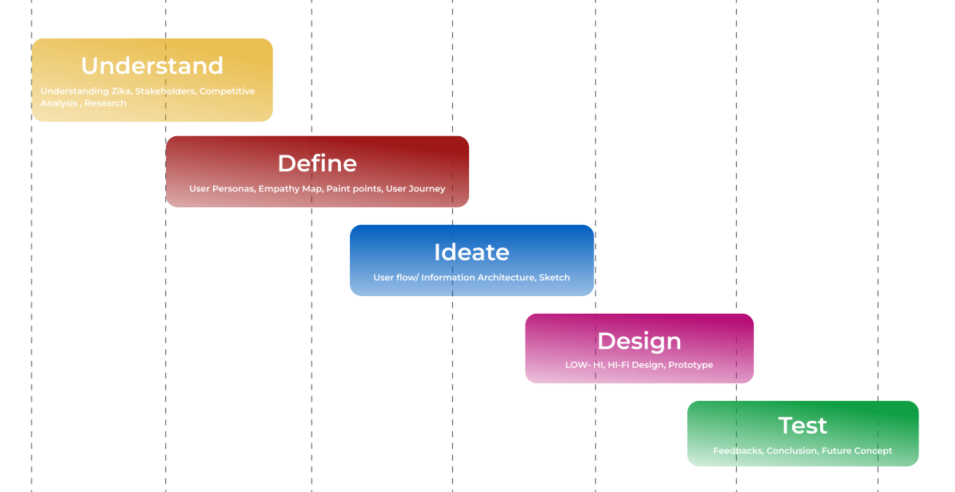
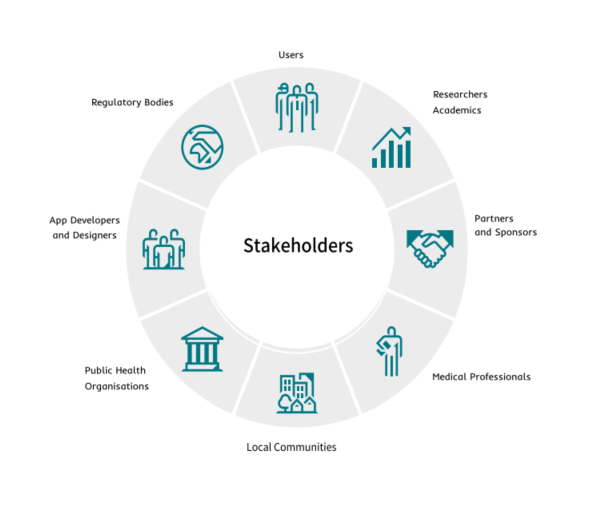
Stakeholders and Research
Primary stakeholders include:
- General public
- Pregnant women
- Medical professionals
- Public health organizations
- Researchers
- Regulatory bodies
Competitive analysis revealed that while many apps provide medical information, none included photo analysis features for mosquito habitat detection, which became ZikaTrack’s unique differentiator.
Unique Features of ZikaTrack
The application includes:
- Prevention techniques and travel advice
- Real-time outbreak statistics
- Interactive community messaging
- Notification alerts
- Photo upload and habitat analysis
The photo analysis feature allows users to upload images of potential mosquito breeding grounds. This contributes valuable environmental data for surveillance and research.
The goal was not only information delivery — but participation.
Quantitative Research Insights
A survey was conducted to understand user expectations.
Key findings:
- 80% consider real-time updates very important
- 80% use the internet as their primary information source
- 100% want articles and news about Zika
- 100% would provide anonymous data for research purposes
- 80% are interested in community sharing features
However, 80% reported neutrality regarding satisfaction with current Zika information sources — indicating a clear opportunity for improvement.
Empathy and User-Centered Design
To design effectively, I developed an empathy map divided into:

High-Fidelity Prototypes
The final design included:
- Onboarding with notification and location control
- Real-time alerts screen
- Photo upload and analysis system
- Community interaction features
- Clean visual hierarchy
- Accessible UI following WCAG guidelines
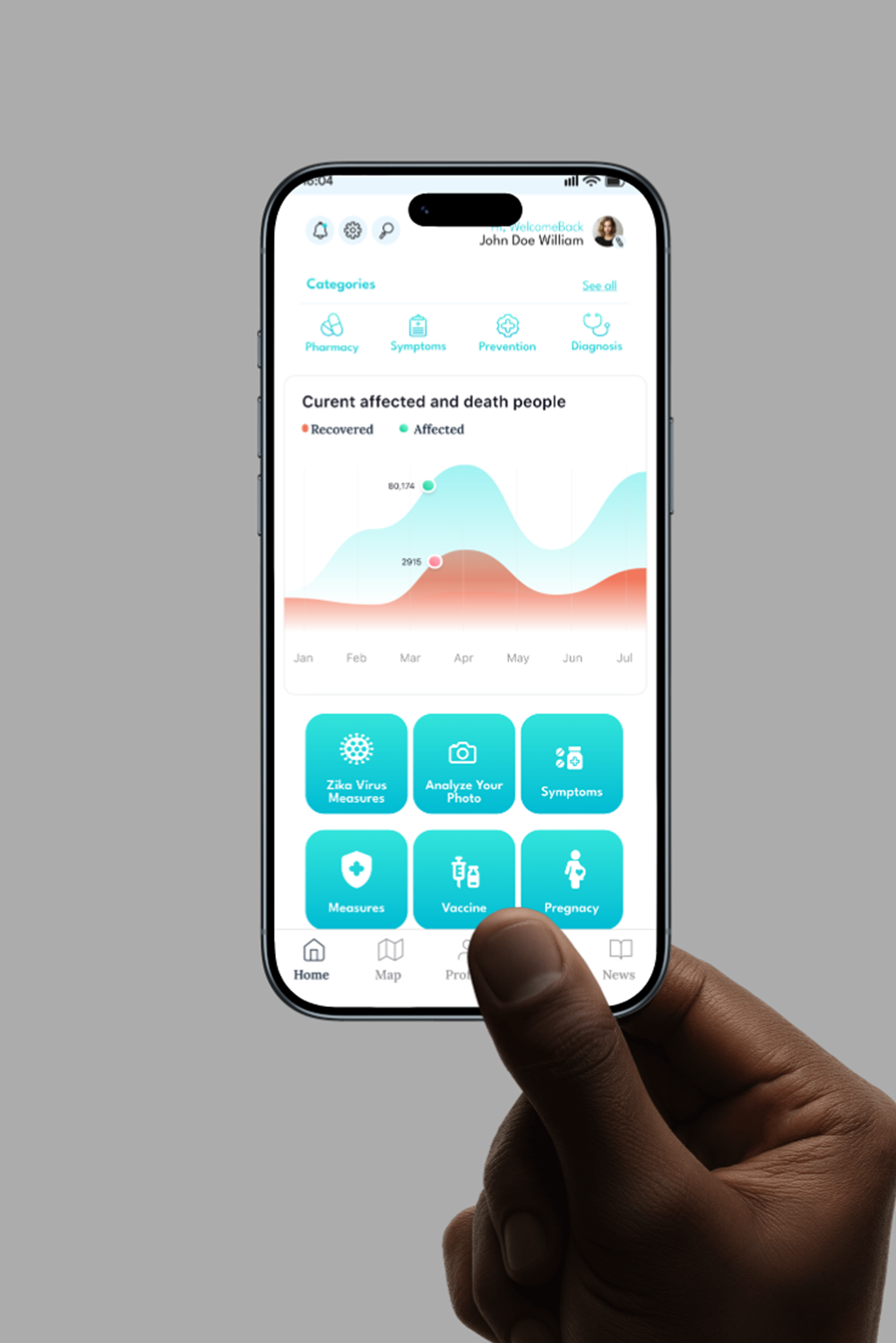
Accessibility considerations included:
- Color contrast
- Screen reader compatibility
- Alternative text
- Clear navigation
The landing page reinforced the app’s friendly, community-oriented identity.
Key Takeaways
ZikaTrack is designed not only to inform but to support public health research.
Features such as photo uploads allow users to actively participate in mosquito surveillance efforts. Real-time alerts and community tools create a sense of shared responsibility.
The app balances:
- Public health communication
- Research data collection
- User privacy
- Emotional reassurance
Lessons Learned
One of the most important insights came during usability testing.
Initially, users were hesitant to provide sensitive medical data during onboarding. However, when informed that the data could contribute to vaccine research and public health initiatives, many reconsidered.
This highlighted a key principle:
Transparency builds trust.
As a result, I added:
- Clear explanations for data collection
- Optional consent screens
- Skip buttons
- Transparent communication about research use
Design helped me better understand people — their fears, hesitations, and motivations.
Technology, when ethically implemented, can become a powerful tool in medicine and disease prevention.
Conclusion
ZikaTrack demonstrates how user-centered design can address public health challenges through digital innovation.
By combining:
- Research
- Empathy
- Structured UX methodology
- Iterative testing
- Ethical data practices
The application provides both individual empowerment and collective health contribution.
Design, in this case, becomes not only a functional solution — but a bridge between medicine and society.
Bibliography
1. WHO Zika App https://www.who.int/tools/who-zika-app
2. Center for Disease Control and Prevention https://www.cdc.gov/
3. National Library of Medicine https://pubmed.ncbi.nlm.nih.gov/ Zika virus: An overview Gautam Rawal, Sankalp Yadav and Raj Kumar
4. mHealth - Mobile healt https://www.techtarget.com/searchhealthit/definition/mHealth
5. Bibliometric Indicators of the Zika Outbreak http://journals.plos.org/plosntds/article?id=10.1371/journal.pntd.0005132
6. Morville, P. (2009). User Experience Deliverables
7. Laubheimer, P. (2015). Which UX Deliverables Are Most Commonly Created and Shared?
8. Clinical Review Zika virus BMJ 2016 https://www.bmj.com/content/352/bmj.i1049
Popular Post






Categories
- Research Insights (02)
- Laboratory Best Practices (04)
- Innovation & Technology (01)
- Industry Trends (03)
- Sustainability in Science (05)
- Events & Workshops (02)
- Educational Resources (04)



.svg)
.svg)
