
A Visual Storytelling Masterclass
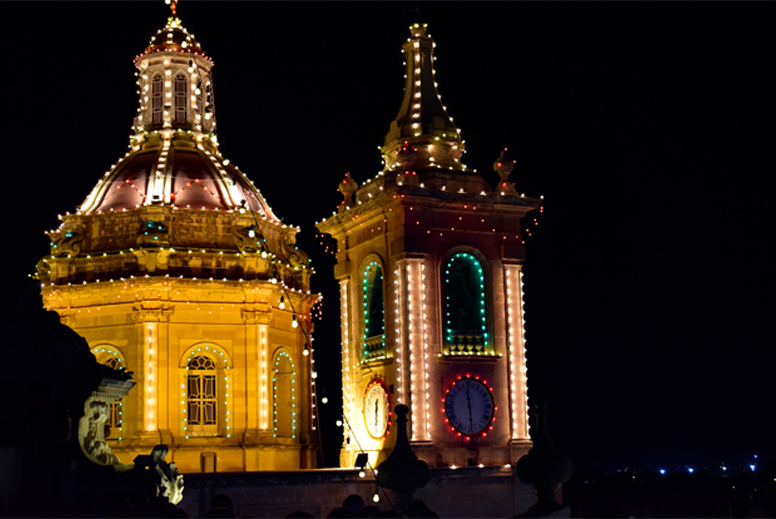
Capturing Maltese Beauty through Digital Photographic Narratives
In March 2024, I submitted my MA in Design thesis at London School of Design and Marketing. My research started from a simple observation: Malta is a small island with a very diverse population, yet feeling a real sense of belonging to the local community can still be difficult. Recent population reporting also shows how significant migration has been in shaping Malta’s population in recent years something that naturally affects everyday culture, identity, and how people relate to place.
At the same time, photography is everywhere. A single image can carry memory, emotion, and meaning and when we place images next to each other, they can become a story instead of “just” a photo. Thinking about photography as both a communication tool and a cultural bridge is not new in visual research. Writers and researchers have long argued that images shape how we understand social life and the world around us.
So I asked myself: what if we could use photographic storytelling designed intentionally, to help people connect to Maltese culture (and to each other) in a more inclusive way?
What I set out to understand
The research question that grounded the project was:
How do individuals in Malta perceive beauty in photographs, and how does this perception vary across demographic groups and cultural background?
This matters because “beauty” is not one fixed thing. It is shaped by lived experience, cultural references, place, and memory. In photography theory, there is a long tradition of exploring how images operate emotionally and culturally, and how viewers construct meaning while looking.
I wasn’t interested in “perfect” images or tourist postcards. I was interested in everyday beauty too street corners, village rhythms, celebrations, textures, architecture, and the small details that locals recognise instantly (and outsiders slowly learn to see).
How I researched it and why I chose co-creation
The project leaned into meaning, storytelling, and perception so qualitative research was essential. But I also used quantitative methods to support the patterns I was seeing and test whether similarities existed across a wider mix of people.
A key part of the project was participatory design: instead of designing for people, I designed with people. Co-creation and participatory approaches are widely discussed in design research as a way to build more meaningful, user-informed outcomes especially when the goal is inclusion and shared ownership.
I also drew on established visual research approaches. For example, in photo-based interviewing, images can work as prompts that open deeper conversations—because people often explain things differently when they’re reacting to pictures rather than to abstract questions.
Finally, to structure the project development clearly, I used the Design Council Double Diamond (Discover, Define, Develop, Deliver), a model built around cycles of divergent and convergent thinking.
What I learned about beauty, identity, and representation
One of the strongest outcomes of the research was this: people often connect “beauty” to story first, and aesthetics second. Even when participants had different cultural backgrounds, many described beauty as something that means something that reflects identity, memory, or values.
At the same time, participants also raised concerns about representation: photography can highlight real life, but it can also oversimplify a place into stereotypes. The tension between “what’s promoted” and “what’s lived” came through strongly, especially when discussing change in neighbourhoods and the fear of losing local character.
From a design perspective, this reinforced something I believed from the start: if we want visual storytelling to support cultural integration, it cannot be one-directional. It has to be plural. It has to make space for many versions of “beauty” to exist side by side.
Sharing the concept through a Visual Storytelling Masterclass
After finishing the MA, I was invited back to present the concept of the thesis as a Visual Storytelling Masterclass which, for me, confirmed that this idea is bigger than one academic submission. It is a design approach that can keep growing: one image, one story, one upload at a time.
Popular Post



Categories
- Research Insights (02)
- Laboratory Best Practices (04)
- Innovation & Technology (01)
- Industry Trends (03)
- Sustainability in Science (05)
- Events & Workshops (02)
- Educational Resources (04)


.svg)
.svg)
