
Award Winning Mobility Design Sprint

MOVE Malta – Designing a Sustainable Mobility Future for Malta
In November 2024, I participated in the Valletta Design Cluster Hackathon - an intensive 24-hour design sprint focused on solving real-world challenges through design, innovation, and collaboration. Our team developed MOVE Malta, a sustainable mobility concept that reimagines public transport across the island. The project was awarded Winning Project of the Hackathon, validating both the urgency of the challenge and the strength of our proposed solution.
The Context: Malta’s Mobility Challenge
Malta faces a growing transport crisis. The country’s heavy reliance on private vehicles has led to congestion, pollution, accessibility gaps, and inefficiencies in public transport usage.
Key insights we identified during the research phase:
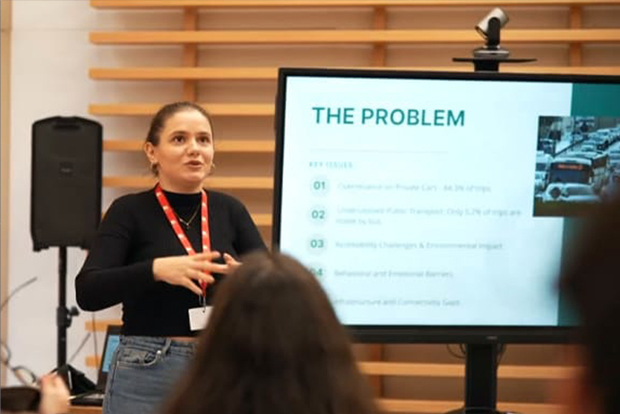
- 84.3% of trips in Malta are made by private car
- Only 5.2% of trips are made by bus
- Accessibility barriers limit mobility for many residents and visitors
- Infrastructure limitations and behavioral resistance discourage public transport use
These findings shaped our central design question:
How might we design a reliable and accessible tram-bus hybrid system for Maltese commuters, tourists, and individuals with mobility challenges in order to reduce car dependency, ease congestion, and promote sustainable travel across the island?
My Role in the Project
During the sprint, I contributed across both strategic and design-focused areas:
- Conducted research and helped frame the core mobility problem
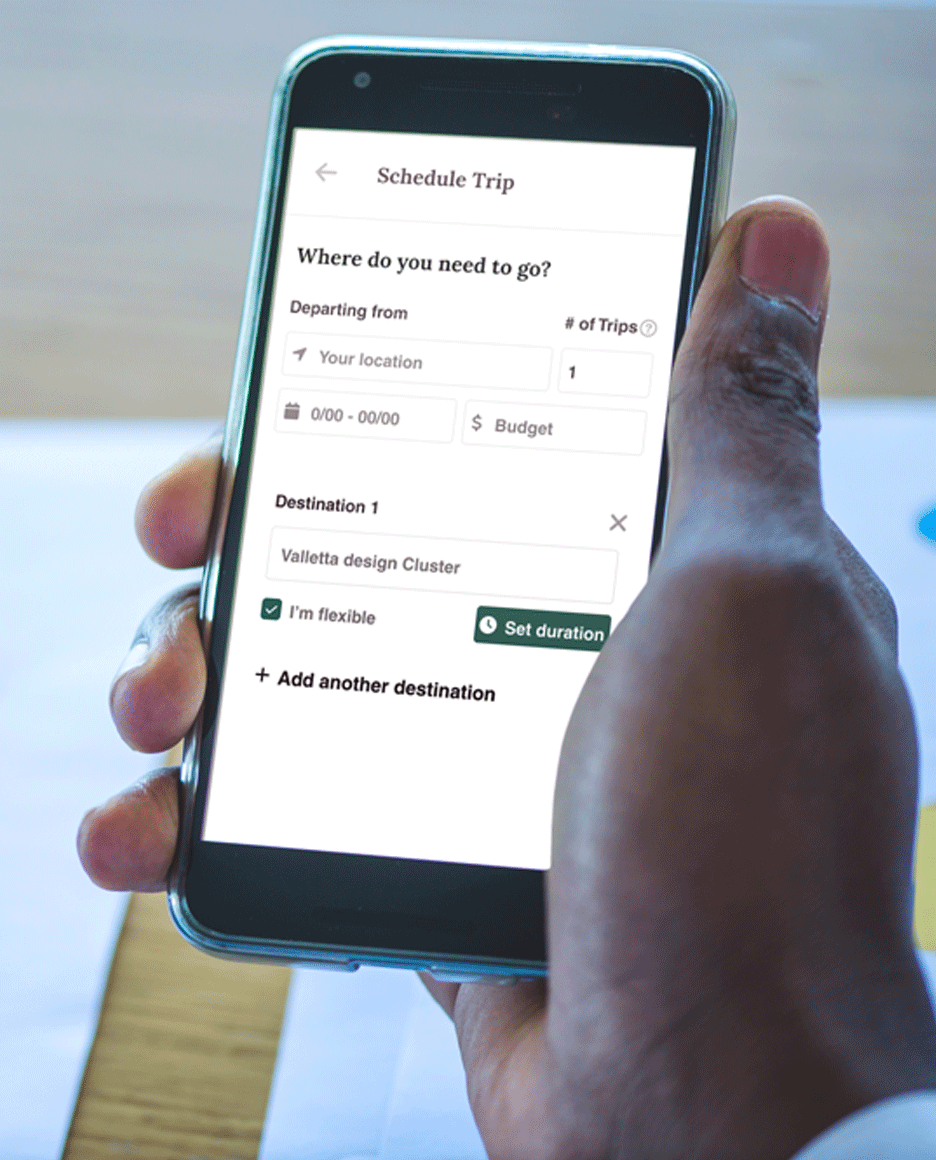
- Designed the UX/UI of the mobility app, including information architecture and prototype
- Led the pitch storytelling and presentation structure
- Collaborated closely with mentors to validate assumptions and refine the solution
Mentorship
Our work was guided by three exceptional mentors:
- Prof. Matthew Montebello, expert in Artificial Intelligence
- Dr. Suzanne Maas, specialist in Urban Mobility for Island Cities
- Ms. Marisa Abela Gatt, design thinking practitioner
Their insights helped us connect design, policy, technology, and human behavior into a cohesive system.
The Solution: MOVE Malta
We proposed a hybrid tram-bus transport ecosystem supported by a digital mobility platform.
Hybrid Tram-Bus System
The physical mobility network focused on reliability, accessibility, and sustainability:
- Dedicated priority lanes to reduce delays
- High-capacity electric or hybrid vehicles
- Strategically located, accessible stops
- Signal priority to ensure consistent travel times
This approach combined the efficiency of trams with the flexibility of buses, making it suitable for Malta’s urban structure.

Digital Mobility App
To support the system, we designed a companion app that enhances the user experience:
- Real-time tracking and disruption alerts
- Contactless smart ticketing
- Live occupancy data to manage crowding
- Multi-modal trip planning with accessibility filters
The app was prototyped in Figma during the sprint, allowing us to quickly validate user flows and service touchpoints.
Development Approach
We followed a Design Sprint methodology, moving from research and ideation to prototyping and validation within 24 hours. This fast-paced format forced clarity, prioritization, and collaborative decision-making.
Budget and Implementation Vision
Our proposal included a high-level feasibility framework:
- Estimated infrastructure investment: €9–11 million
- Vehicles: approximately €6 million
- Additional costs for digital systems, operations, and marketing
We proposed a phased rollout over 36 months:
- Pilot phase
- Testing and refinement
- Expansion of routes
- Full-scale launch
Outcome
Within just one day, our team delivered:
- A scalable transport ecosystem concept
- A working mid-fidelity app prototype
- A strategic rollout roadmap
- A compelling stakeholder pitch
The project was selected as the winning concept of the Valletta Design Cluster Hackathon, reinforcing the importance of design-led approaches to public infrastructure challenges.
Reflection
MOVE Malta demonstrated how design can bridge technology, urban planning, and human behavior to create meaningful systemic change. For me personally, the experience strengthened my ability to:
- Translate research into actionable design decisions
- Build user-centered mobility solutions
- Communicate complex ideas through storytelling and visuals
- Collaborate effectively under intense time constraints
I believe sustainable mobility is not just about transport, it’s about access, inclusion, environmental responsibility, and quality of life. MOVE Malta was an exciting step toward imagining what that future could look like.
Popular Post


Categories
- Research Insights (02)
- Laboratory Best Practices (04)
- Innovation & Technology (01)
- Industry Trends (03)
- Sustainability in Science (05)
- Events & Workshops (02)
- Educational Resources (04)


.svg)
.svg)
